
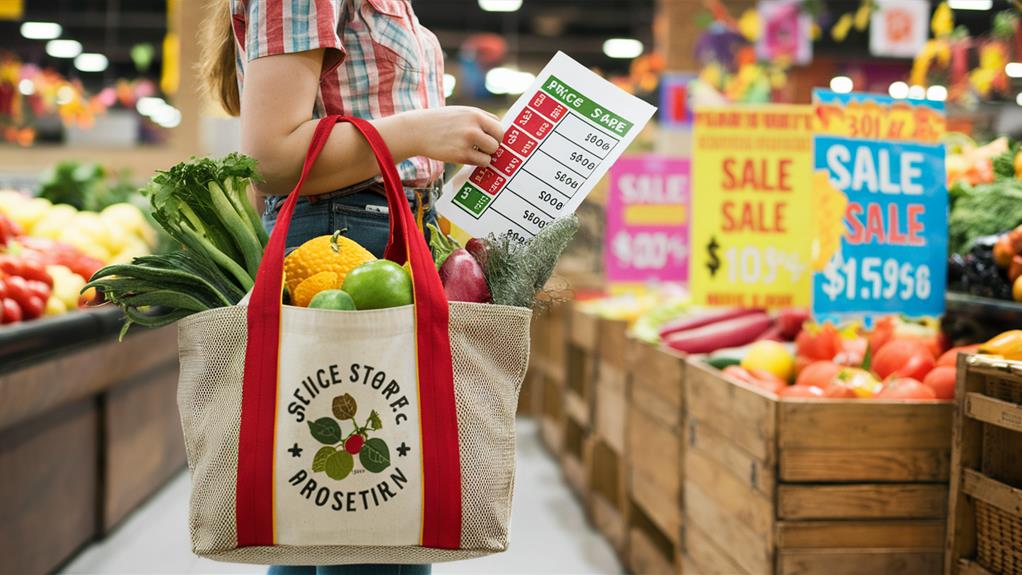
To save money on grocery shopping, start with meal planning. This helps you organize meals for the week and reduces impulse buys. Next, create a shopping list based on your meal plan. It keeps your purchases focused and budget-friendly. Finally, take advantage of sales and promotions. Check weekly ads and stock up on non-perishables when prices drop. Choosing seasonal produce also cuts costs while ensuring freshness. With these simple strategies, you'll master grocery shopping on a budget. There are even more tips and tricks to explore, so stick around to discover how to further enhance your savings!
Key Takeaways
- Create a detailed meal plan to avoid impulse buys and minimize food waste, focusing on plant-based ingredients for cost efficiency.
- Utilize a shopping list categorized by sections to streamline your grocery trip and stick to budgeted items.
- Take advantage of weekly sales and promotions, and stock up on non-perishables when prices are low.
- Choose seasonal produce for freshness and affordability, as they are often cheaper and more nutritious.
- Use digital coupons and store apps to gain additional savings on your grocery purchases.
Plan Your Meals
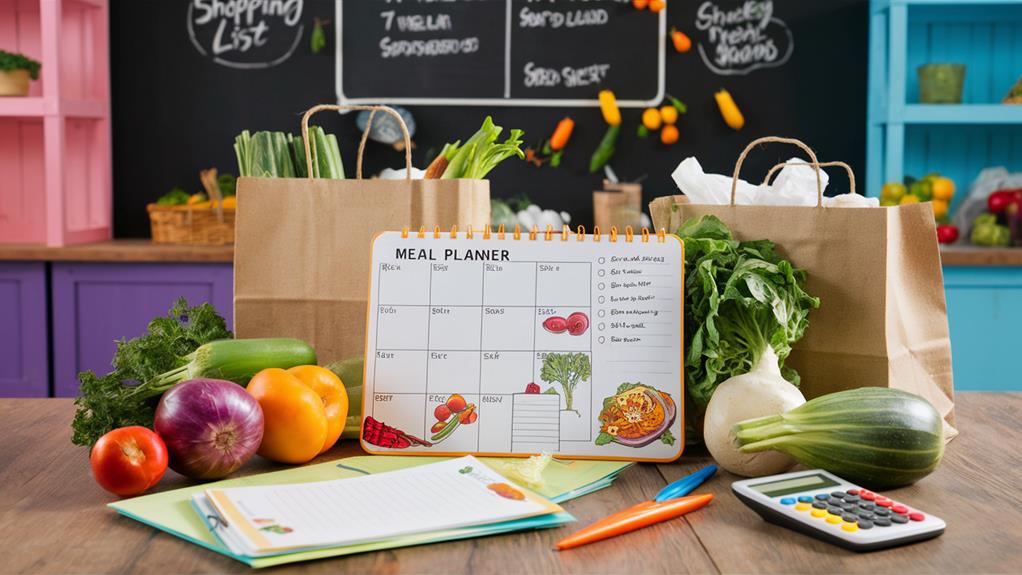
When you plan your meals, you not only save time but also money at the grocery store. By organizing your week ahead of time, you can make smarter decisions about what to buy and avoid impulse purchases that can quickly add up. Start by outlining your meals for each day, including breakfast, lunch, and dinner. This structure helps you visualize what you need, making your grocery trip more efficient.
Additionally, consider incorporating eco-friendly practices into your meal planning, such as using plant-based ingredients that not only benefit your health but also contribute to a healthier planet.
Meal prep is a game changer. Spend a few hours on the weekend chopping vegetables, marinating proteins, and cooking grains in bulk. It's a great way to guarantee you have healthy, homemade meals ready to go. This not only saves money but also prevents you from reaching for takeout when you're short on time.
Don't forget about ingredient substitution, either. If a recipe calls for something you don't have, look for alternatives you already own. For example, if a dish requires fresh herbs but you have dried ones, use them instead. This not only cuts costs but also reduces food waste.
Lastly, keep an eye on sales and seasonal produce. Planning your meals around these offers can lead to significant savings.
Use a Shopping List
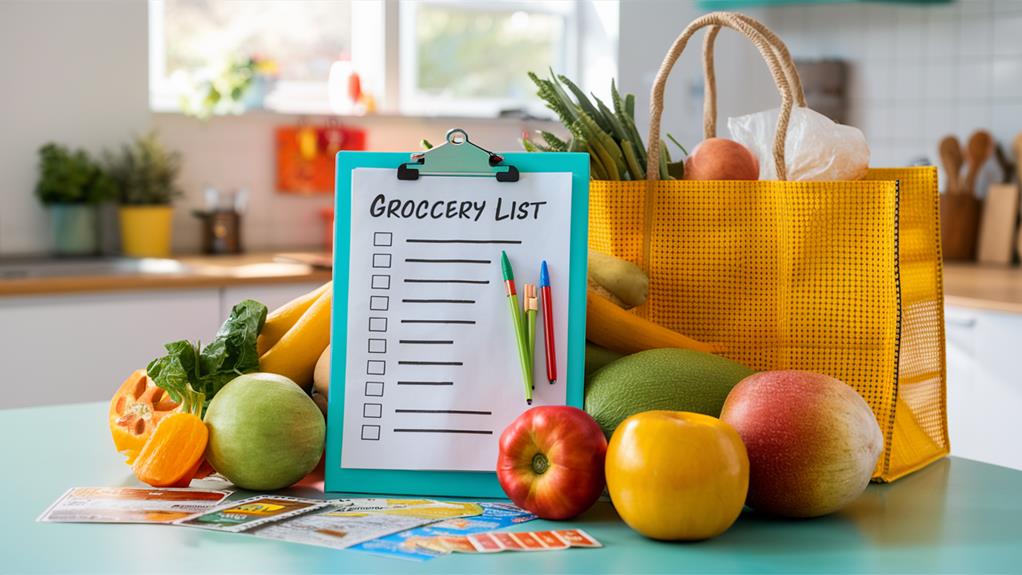
A shopping list is your best ally for a successful grocery trip. It not only helps you remember what you need but also plays a vital role in grocery organization and budget tracking. By sticking to a list, you'll minimize impulse buys, which can quickly derail your financial goals.
Here's a simple table to illustrate how a well-structured shopping list can make a difference:
| Item Category | Planned Items | Estimated Cost |
|---|---|---|
| Produce | Apples, Spinach | $10 |
| Proteins | Chicken, Eggs | $15 |
| Grains | Rice, Whole Wheat Bread | $8 |
| Snacks | Nuts, Granola Bars | $7 |
When you categorize your list, you streamline your shopping experience. Grouping items by category allows you to navigate the store effectively, saving time and reducing the chance of forgetting essential items. As you jot down your planned purchases and their estimated costs, you'll also have a clear picture of your spending, aiding in budget tracking.
Next time you head to the store, take a moment to create an organized shopping list. Not only will it help you stay focused, but it'll also foster a sense of community as you share tips and recipes with friends and family. Trust me, you'll feel empowered knowing you're making thoughtful choices that benefit both your wallet and your kitchen.
Take Advantage of Sales
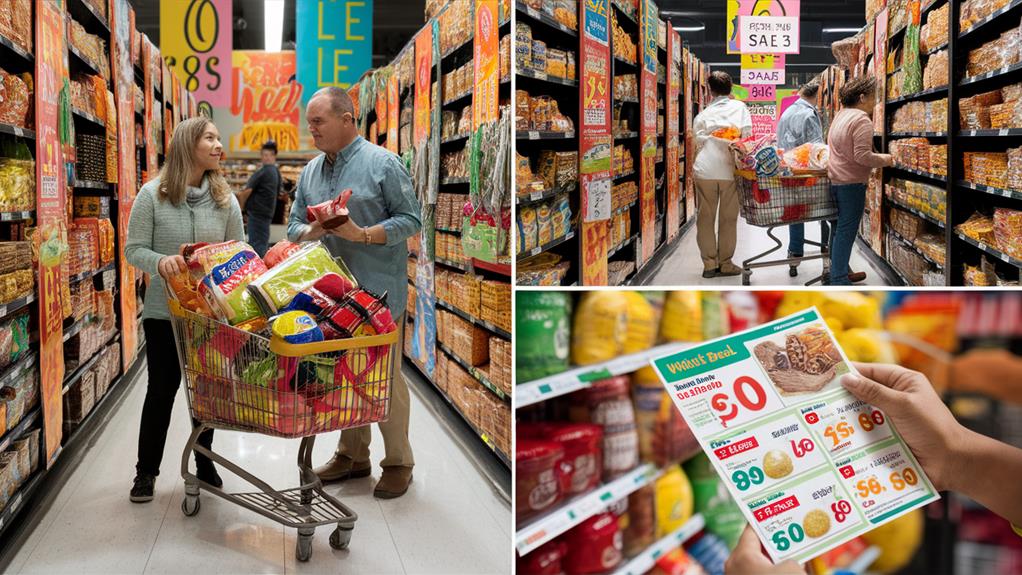
Taking advantage of sales can greatly reduce your grocery expenses. By keeping an eye on weekly ads and promotions, you can score some fantastic deals that make a real difference in your budget.
Additionally, consider using reusable produce bags to save money on produce by reducing the need for single-use plastic bags. Don't shy away from bulk purchasing when items are on sale, as this can save you both time and money in the long run.
Here are a few tips to maximize your savings:
- Stock up on non-perishables: Items like canned goods, pasta, and rice often go on sale. Buy in bulk to guarantee you have a pantry full of essentials.
- Choose seasonal produce: Fruits and vegetables in season aren't only fresher but also cheaper. Take advantage of these sales to fill your cart with nutritious options.
- Use digital coupons and apps: Many stores offer apps that highlight current sales or allow you to clip digital coupons. This can lead to significant savings when combined with sale items.
Frequently Asked Questions
How Can I Reduce Food Waste While Grocery Shopping?
To reduce food waste while grocery shopping, start with meal planning. Create a weekly menu and make a shopping list to stick to it. This keeps you from buying unnecessary items.
Practice portion control by serving appropriate amounts for each meal, which can help you avoid leftovers that often go uneaten.
Are Generic Brands Worth Buying Instead of Name Brands?
Are generic brands worth buying instead of name brands? Absolutely!
When you explore generic brand comparisons, you'll often find that the price vs quality balance favors generics. Many generic products match or even exceed the quality of their name-brand counterparts, but at a fraction of the cost.
Try a few to see what you like. You might discover that saving money doesn't mean sacrificing taste or quality. It's a win-win!
What Are Some Healthy Snack Options That Are Budget-Friendly?
Imagine opening your pantry and discovering healthy snack options that won't break the bank. You've got choices!
Consider healthy snack swaps like air-popped popcorn instead of chips or Greek yogurt with fruit instead of sugary snacks.
Try budget-friendly recipes like homemade energy bites or roasted chickpeas.
These simple changes can satisfy your cravings while keeping your wallet happy.
Embrace these snacks, and you'll find deliciousness without sacrificing your health or budget!
How Can I Find Coupons for My Favorite Products?
To find coupons for your favorite products, start with online couponing websites like RetailMeNot or Coupons.com.
You'll often discover discounts for brands you love. Don't forget to check your local store's website for exclusive deals or weekly ads featuring local discounts.
Signing up for newsletters from manufacturers can also score you coupons directly.
Should I Shop at Multiple Stores for Better Deals?
Shopping at multiple stores can be like casting a wide net for fish; you'll often catch better deals.
By doing a little price comparison, you can maximize your savings on groceries. While store loyalty has its perks, sometimes the best prices are hiding across town.
Keep an eye on weekly ads and promotions. It's all about balancing convenience with savings, so don't hesitate to explore different options to get the most bang for your buck.
Conclusion
By implementing these three simple tips, you'll navigate the grocery aisles like a seasoned captain steering a ship through calm waters. Planning your meals, sticking to a shopping list, and taking advantage of sales will not only help you save money but also reduce waste and make your shopping trips more efficient. So, grab your list and set sail on your next grocery adventure, and watch your savings grow with each trip!