
To create a budget-friendly skincare routine, start by evaluating your skin type. This helps you choose products that suit your needs—whether oily, dry, combination, or sensitive. Next, simplify your product selection. Opt for a gentle, sulfate-free cleanser, a lightweight moisturizer with hydrating ingredients like hyaluronic acid, and broad-spectrum sunscreen for protection. Finally, establish a consistent routine. Cleanse, moisturize, and protect daily to maintain healthy skin. Incorporate treatments as needed, like salicylic acid for acne. By following these steps, you can achieve great results without overspending. There's much more to explore about enhancing your routine further.
Key Takeaways
- Identify your skin type to choose affordable products that effectively address your specific needs, such as oily, dry, or combination skin.
- Focus on a gentle, sulfate-free cleanser to maintain your skin's natural oils without breaking the bank.
- Use a lightweight moisturizer with hydrating ingredients, like hyaluronic acid, that fits your budget for daily hydration.
- Incorporate a broad-spectrum sunscreen to protect your skin year-round without spending excessively on multiple products.
- Establish a consistent routine; set reminders to ensure you stick to your essential skincare steps daily.
Assess Your Skin Type
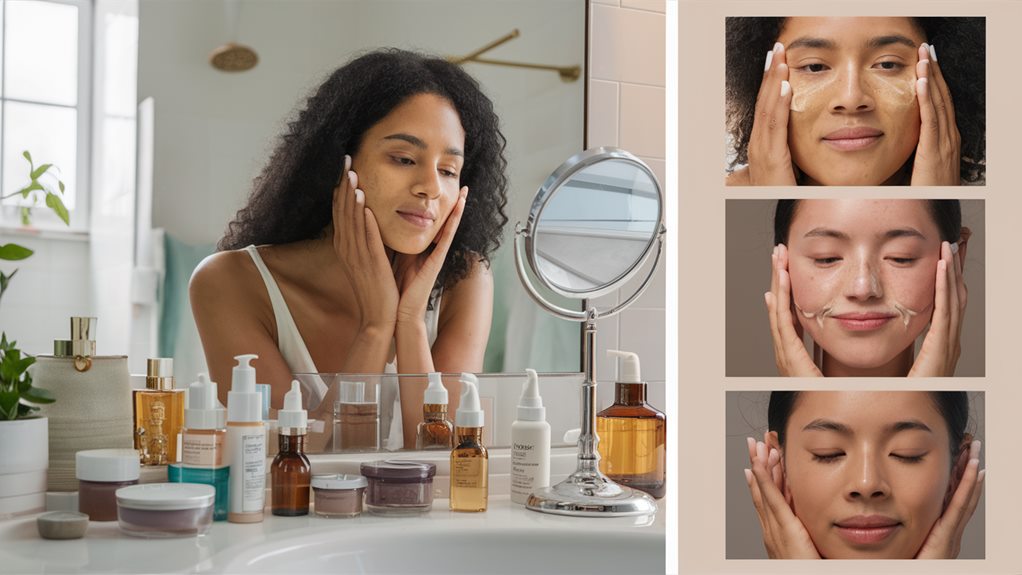
To build an effective budget-friendly skincare routine, you first need to assess your skin type, as this will guide your product choices and application methods. Understanding whether you have oily, dry, combination, or sensitive skin enables you to select the right product ingredients that cater specifically to your needs.
Certain treatments, like LED light therapy masks, can also complement your routine, targeting specific skin concerns based on your type.
Start by examining how your skin behaves throughout the day. If it feels tight or flaky, you likely have dry skin. Conversely, if your face appears shiny and you notice enlarged pores, you're probably dealing with oily skin.
Combination skin showcases both characteristics, often with an oily T-zone and dry cheeks. Sensitive skin may react to products with redness or irritation, requiring extra care.
Once you've identified your skin type, it's essential to focus on the ingredients in the products you choose. For dry skin, look for hydrating components like hyaluronic acid or glycerin. Oily skin benefits from lightweight, non-comedogenic ingredients such as salicylic acid.
Sensitive skin requires gentle, hypoallergenic formulations. By tailoring your routine based on your skin type, you'll create a solid foundation for achieving healthy, radiant skin without breaking the bank.
Simplify Your Product Selection
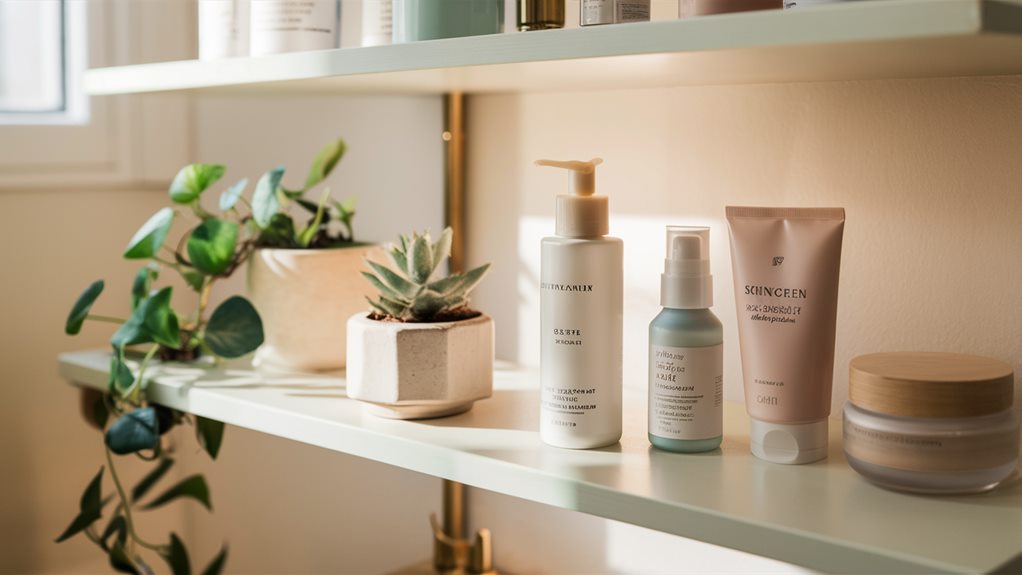
Now that you've identified your skin type, simplifying your product selection becomes much easier. You can focus on the essential product ingredients that cater specifically to your skin's needs, making your routine both effective and budget-friendly.
Just as with hair care, where the right masks can nourish your hair, selecting the right skincare products guarantees your skin receives the ideal benefits. Here are four key items to take into account:
- Gentle Cleanser: Look for a sulfate-free formula that won't strip your skin of its natural oils.
- Moisturizer: Choose a lightweight, hydrating moisturizer with ingredients like hyaluronic acid or glycerin.
- Sunscreen: Don't skip this step! A broad-spectrum sunscreen is vital for protecting your skin year-round.
- Treatment Product: Depending on your skin concerns, think about a targeted treatment, like salicylic acid for acne or vitamin C for brightening.
As seasons change, remember to make seasonal adjustments to your product selection. For instance, you might need a richer moisturizer in winter and a lighter one in summer.
Establish a Consistent Routine

A consistent skincare routine is essential for achieving and maintaining healthy skin. Start by establishing a daily regimen that includes cleansing, moisturizing, and protection.
Use effective cleansing techniques tailored to your skin type—whether that's a gentle gel for oily skin or a creamy cleanser for dryness. This step removes impurities and prepares your skin for the next phases.
Consider incorporating a vitamin C serum, such as TruSkin Vitamin C Serum, which is known for targeting fine lines and dark spots, enhancing your skin's overall brightness.
Next, never underestimate the moisturizer's importance. A good moisturizer not only hydrates your skin but also acts as a barrier against environmental stressors.
Choose a lightweight option for daytime and a richer formula for nighttime to guarantee your skin stays nourished around the clock.
Aim to follow this routine both morning and night. Consistency is key; your skin needs time to adapt and show results.
Set reminders if you find it hard to stick to the routine at first. Eventually, it'll become second nature.
Frequently Asked Questions
Can I Use Expired Skincare Products Safely?
Using expired skincare products isn't safe, and you should avoid it.
Skincare shelf life varies, but most products have specific expiration dates for a reason. Expired products can lose effectiveness and may harbor harmful bacteria, leading to skin irritation or infections.
You don't want to risk your skin's health for the sake of saving a few dollars. Always check expiration dates and invest in fresh products for the best results.
How Often Should I Exfoliate My Skin?
So, you think daily exfoliation's going to turn your skin into a glowing masterpiece? Not quite!
Depending on your skin type, you should exfoliate 1-3 times a week. If you've got sensitive skin, stick to gentle exfoliation techniques to avoid irritation.
Oily or thick skin types might handle more frequent exfoliation, while dry skin benefits from less.
Listen to your skin; it's the real expert here! Happy exfoliating!
Are DIY Skincare Recipes Effective and Safe?
DIY skincare recipes can be effective, but their safety depends on the natural ingredients you choose.
While many believe that all natural products are harmless, this isn't always true. Some ingredients can cause irritation or allergic reactions.
It's important to research and avoid common skincare myths that suggest DIY is always better.
Test any new recipe on a small area first, and consult a dermatologist if you're unsure about specific ingredients.
What Ingredients Should I Avoid for Sensitive Skin?
If you've ever felt that sting after applying a product, you know how important it's to choose wisely.
For sensitive skin, steer clear of harsh ingredients like alcohol, synthetic fragrances, and parabens. Instead, opt for fragrance-free options that prioritize soothing ingredients like aloe vera and chamomile.
These gentle choices can help calm irritation and restore your skin's balance, making you feel more confident and comfortable in your own skin.
How Can I Tell if a Product Is Causing Irritation?
To tell if a product's causing irritation, watch for irritation signs like redness, itching, or burning.
Start with product patch testing by applying a small amount to a discreet area. Wait 24 hours and observe for any adverse reactions.
If you notice discomfort, it's best to avoid that product. Remember, everyone's skin is unique, so what works for others mightn't work for you.
Trust your instincts and prioritize your skin's health.
Conclusion
In a world where skincare can cost a small fortune, it's ironic that the best routines are often the simplest. By evaluating your skin type, simplifying your product selection, and establishing consistency, you'll discover that less truly is more. You don't need an arsenal of expensive creams to achieve healthy skin; just a thoughtful approach that fits your budget. Embrace this straightforward path, and watch your skin thrive while your wallet stays happy.