
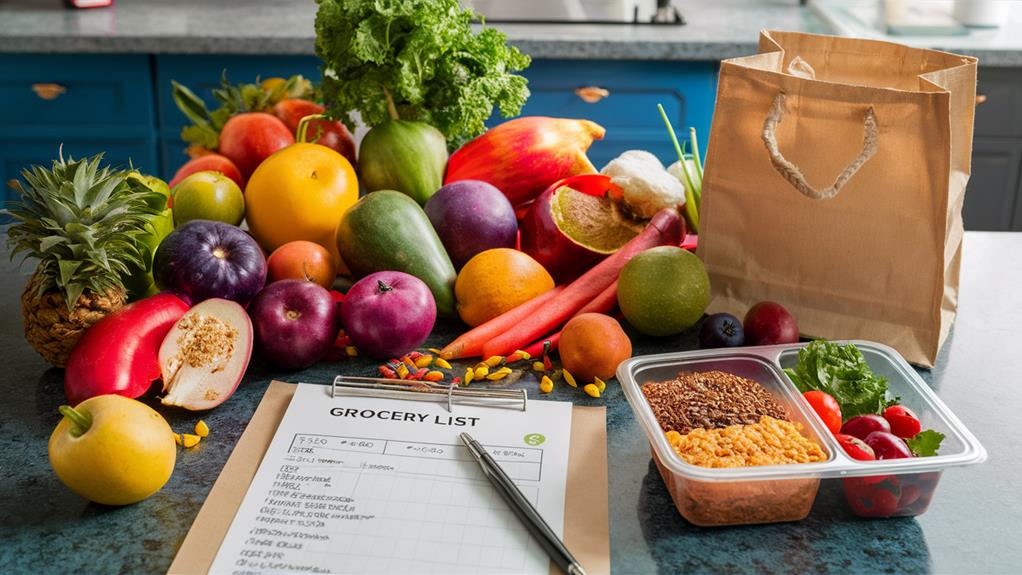
To save money on grocery shopping and meal prep, start by planning your meals and creating a shopping list to avoid impulse buys. Choose seasonal produce, as it's often fresher and cheaper. Buy pantry staples in bulk to cut costs and make use of digital coupons for extra savings. Avoid convenience foods which can inflate your bills; instead, prep meals in batches to save time and money. Finally, guarantee proper food storage to minimize waste and keep meals fresh. Implementing these strategies can streamline your shopping experience, but there's more to explore for even greater savings.
Key Takeaways
- Create a detailed shopping list organized by aisle to stay focused and avoid impulse purchases, ensuring you buy only what you need.
- Plan meals in advance and batch cook to save time, reduce stress, and ensure you always have healthy options available.
- Buy seasonal produce and store brands to enjoy fresher items and significant savings, while supporting local farmers and manufacturers.
- Use digital coupons and loyalty programs to maximize savings, and check for available discounts before heading to the store.
- Properly store food in airtight containers to maintain freshness, extend shelf life, and reduce food waste, ultimately saving money.
Plan Your Meals Ahead
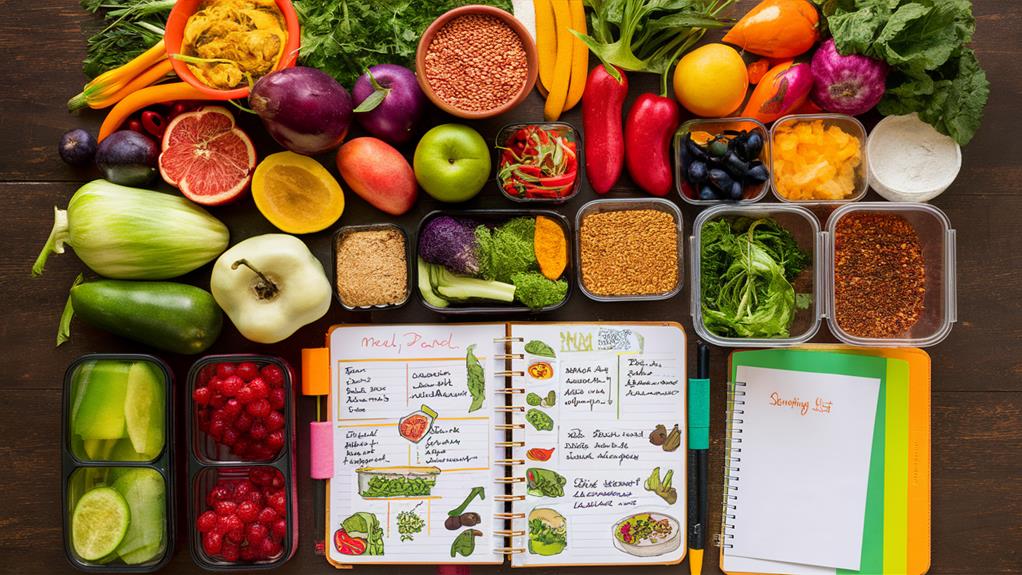
Planning your meals ahead can streamline your grocery shopping and reduce food waste. When you engage in nutritional planning, you're not just picking out random items; you're creating a roadmap for a week or even a month. This approach helps you make informed decisions about what you need, which cuts down on impulse buys that can inflate your grocery bill.
Additionally, preparing smoothies for breakfast or snacks can be a great way to incorporate fruits and vegetables into your diet, making the most of your grocery purchases while guaranteeing you have nutritious options on hand. Blenders for Smoothies can elevate your meal prep experience by providing quick and easy ways to enjoy healthy ingredients.
Start by considering your dietary needs and preferences. This is where recipe rotation becomes invaluable. By rotating a set of go-to recipes, you can assure variety while minimizing the time spent deciding what to cook. It's a smart strategy that keeps meals exciting without overwhelming you.
For instance, you might have a weekly rotation that includes a vegetarian dish, a lean protein option, and a hearty grain-based meal.
As you plan, aim for balanced meals that incorporate proteins, vegetables, and healthy fats. This method fosters a sense of belonging, as it allows you to share nourishing meals with family and friends, enhancing your social connections.
Plus, when you plan ahead, you'll likely find that you can use similar ingredients across multiple meals, reducing waste and saving money.
Incorporating nutritional planning and recipe rotation into your grocery routine not only simplifies your shopping experience but also cultivates healthier eating habits. By taking the time to prepare, you're setting yourself up for success, making mealtime something to look forward to rather than a chore.
Make a Shopping List
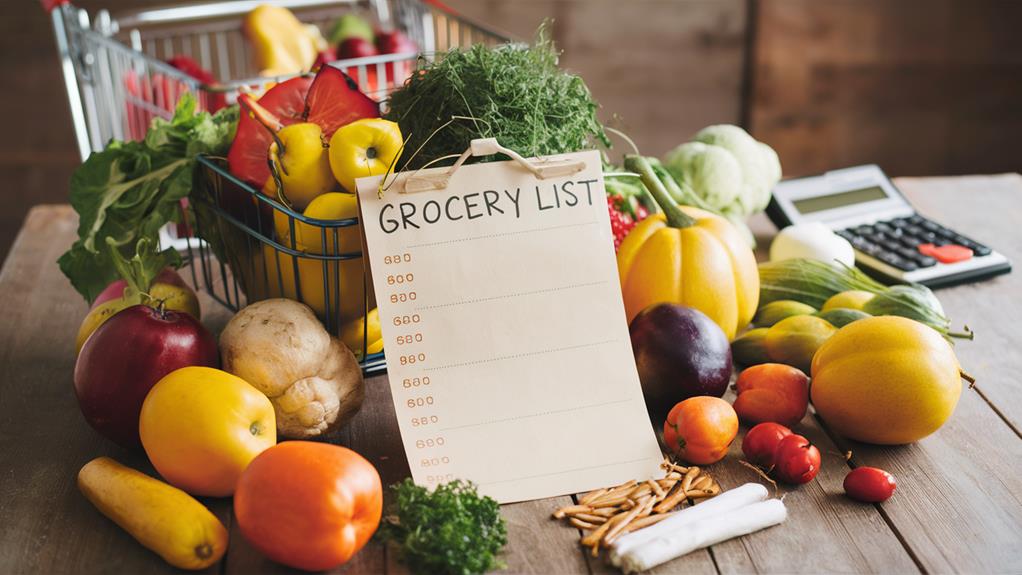
How can you assure a successful grocery trip? It all starts with making a shopping list. Creating a well-organized list not only helps you stay on track but also keeps you within your grocery budget. Without one, it's easy to get sidetracked by impulse buys and items you don't need.
Additionally, just as selecting eco-friendly products like plant-based detergents can enhance your laundry routine, choosing items with minimal packaging can make your grocery shopping more sustainable.
To enhance your list organization, consider these three practical tips:
- Categorize by aisle: Group items by sections of the store, like produce, dairy, and pantry staples. This saves you time and reduces the chances of doubling back.
- Prioritize essentials: Mark off must-have items first. This assures you won't forget the essentials, making your meal prep smoother.
- Include quantities: Write down how much of each item you need. This helps prevent overbuying and waste, keeping your budget intact.
When you take the time to craft a thoughtful list, you set yourself up for success. You'll find it easier to stick to your grocery budget while feeling more in control of your meal planning.
Plus, a well-organized list can foster a sense of belonging in your community, as you can share tips and recipes with friends and family.
Remember, grocery shopping doesn't have to be a chaotic experience. With a clear plan in hand, you'll navigate the aisles with confidence, making informed choices that align with your lifestyle and values.
Stick to Seasonal Produce
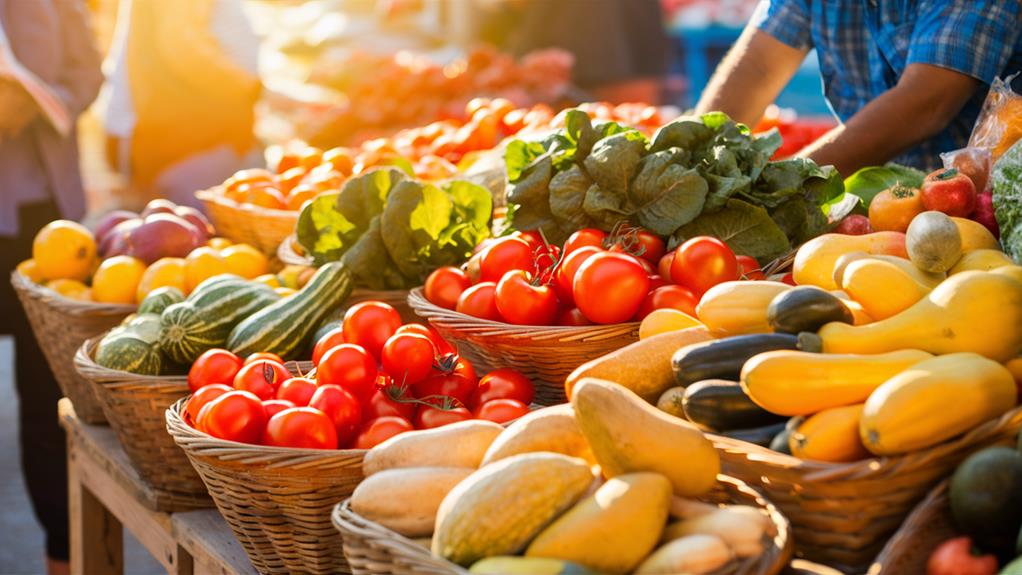
Sticking to seasonal produce not only enhances the flavor of your meals but also supports your local economy and reduces your carbon footprint. When you choose fruits and vegetables that are in season, you're likely to find them fresher, tastier, and more affordable. This practice connects you with local farmers who work tirelessly to provide high-quality, fresh ingredients. By supporting these farmers, you contribute to your community's economy and promote sustainable agricultural practices.
Additionally, incorporating fresh herbs, like those from a home herb garden, can elevate your dishes while ensuring you have access to high-quality growing mediums that support ideal plant health.
Incorporating seasonal recipes into your meal planning can make your cooking more exciting. Imagine savoring juicy summer tomatoes or crisp autumn squash, both bursting with flavor and nutrients. These seasonal ingredients can transform simple dishes into culinary delights. Plus, they're often less expensive than out-of-season produce, which is typically shipped from far away and often sold at a premium.
To get started, familiarize yourself with what's in season in your area. Many grocery stores highlight seasonal produce, or you can check local farmers' markets for the freshest options. As you gather your ingredients, consider creating a weekly meal plan based on what's available. This not only saves you money but also connects you with the rhythms of nature.
Buy in Bulk
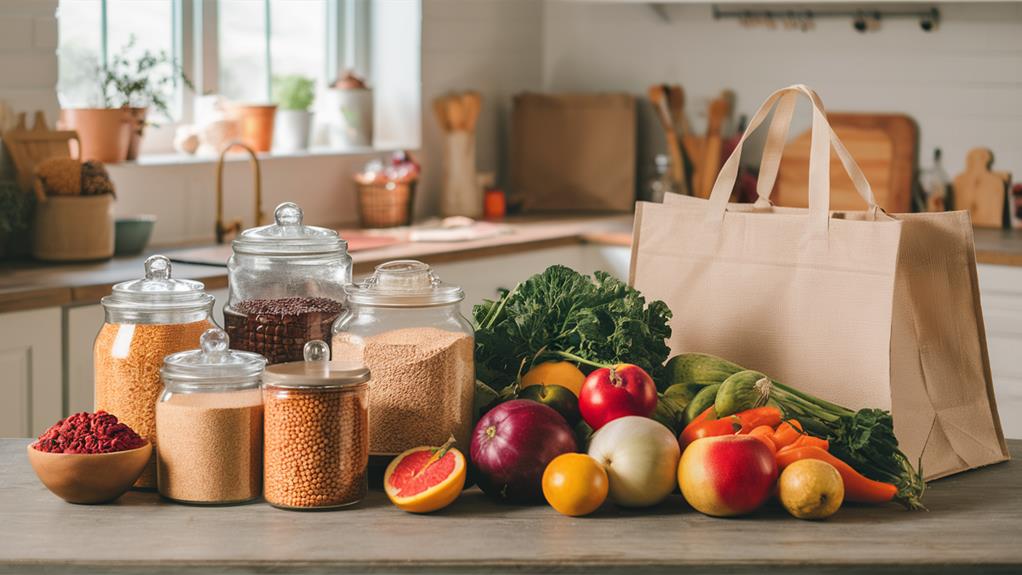
Buying in bulk can greatly cut your grocery bills while also reducing packaging waste. Engaging in bulk purchasing not only offers impressive cost savings, but it also allows you to stock up on pantry staples you and your family use frequently.
Think about the benefits of having these essentials on hand:
- Large bags of rice or pasta
- Canned goods like tomatoes or beans
- Household items such as toilet paper or laundry detergent
When you opt for bulk buying, consider the space you have at home. Effective storage solutions are vital to prevent spoilage and waste. Invest in airtight containers to keep your items fresh, and organize your pantry so you can easily see what you have.
Group buying is another savvy strategy, especially if you're part of a larger family or community. Pooling resources with others can maximize savings while also fostering a sense of belonging. You can share costs and split the bulk items, making smart shopping a more collaborative effort.
Don't forget to check online deals for bulk items. Many retailers offer discounts that can lead to even greater savings.
Use Coupons and Discounts

Have you ever thought about how much you could save by using coupons and discounts? It's easier than you might think to stretch your grocery budget when you embrace digital coupons and loyalty programs. These tools not only help you save money but also create a sense of community among fellow savvy shoppers.
Here's a quick look at the potential savings you can achieve:
| Item | Savings with Coupons |
|---|---|
| Cereal | $1.50 |
| Milk | $0.75 |
| Bread | $1.00 |
| Vegetables | $2.00 |
| Frozen Meals | $1.25 |
When you leverage digital coupons, you'll find that they're often easier to use than traditional paper ones. Many grocery stores have apps that allow you to load discounts directly onto your loyalty card, simplifying the checkout process. Plus, by joining loyalty programs, you can access exclusive deals and earn points that lead to further savings.
Don't overlook the power of planning. Take a few moments to check for available coupons before you head out. You'll not only feel accomplished but also connected to a larger community of budget-conscious shoppers. Using coupons and discounts transforms grocery shopping from a chore into a smart, communal experience where you belong. So, why wait? Start clipping those coupons and signing up for loyalty programs today! Your wallet will thank you.
Choose Store Brands
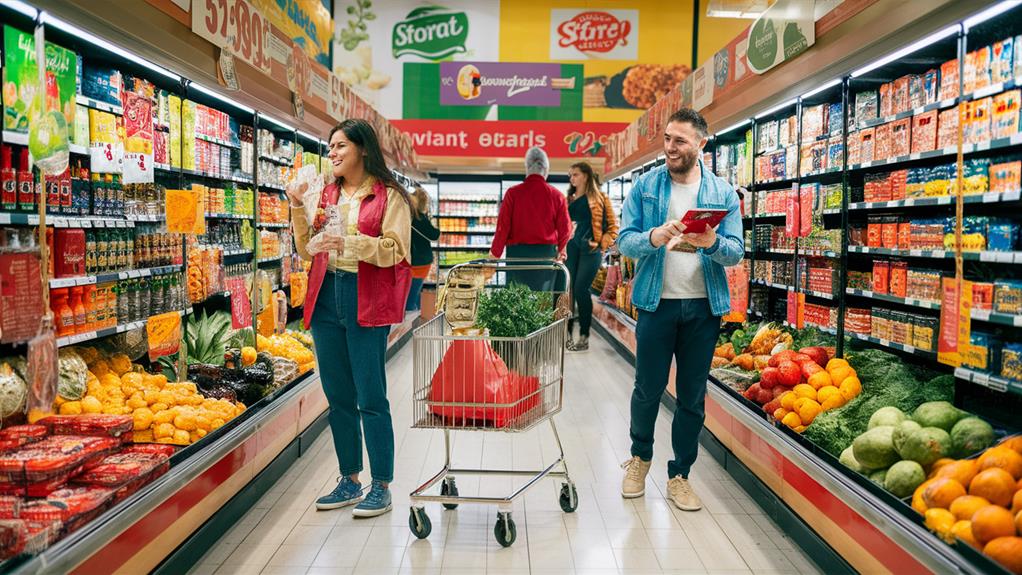
Pairing coupons and discounts with store brands can amplify your savings even further. Store brands often offer comparable quality to national brands at a fraction of the price. By choosing these products, you're not just making a smart financial decision; you're part of a growing community that values quality without breaking the bank.
When you perform store brand comparisons, you may be surprised at how similar they're to their more expensive counterparts. Here are a few areas where you might notice significant savings:
- Cereal: Store brand cereals often mimic the flavors and textures of popular brands.
- Frozen Vegetables: These are usually equally nutritious and just as convenient.
- Snacks: You can find a variety of chips and cookies that taste just as good as national brands.
Quality perception can sometimes hold you back from trying store brands. However, many shoppers report satisfaction with their purchases, debunking the myth that store brands are inferior.
In fact, some store brands are even manufactured by the same companies that produce national brands, ensuring you get similar quality.
Avoid Convenience Foods
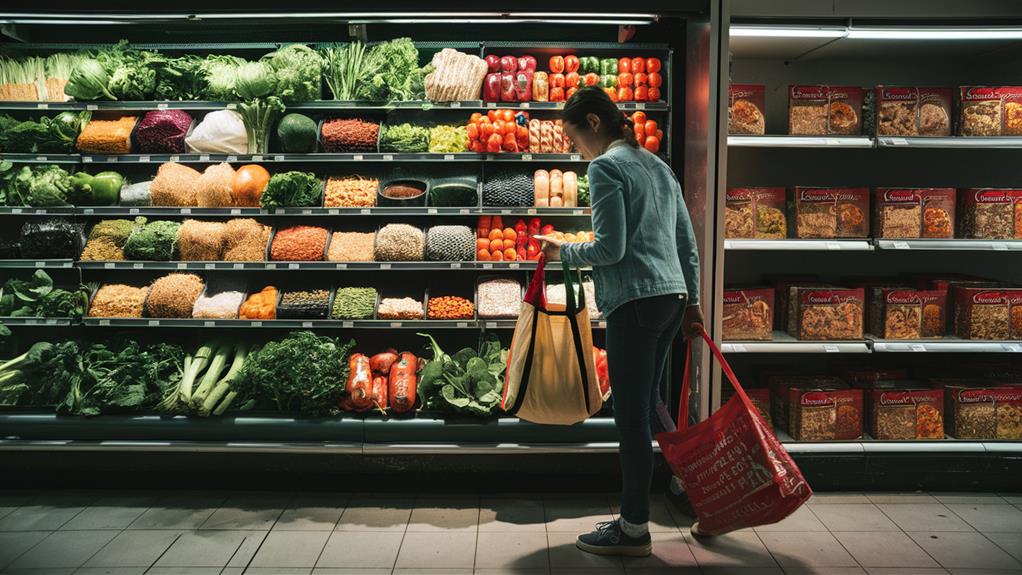
Often, it's tempting to reach for convenience foods when you're pressed for time or energy, but these products can considerably inflate your grocery bill. Not only do they often cost more, but they may also lack the nutritional value you want for yourself and your family. Instead, consider opting for frozen alternatives or making homemade snacks that can save you money and enhance your diet.
Here's a quick comparison:
| Convenience Foods | Budget-Friendly Alternatives |
|---|---|
| Pre-packaged meals | Frozen alternatives |
| Store-bought snacks | Homemade snacks |
| Microwaveable sides | DIY side dishes from scratch |
| Instant oatmeal packets | Bulk oats with toppings |
Frozen alternatives can be just as nutritious and are often more affordable than their fresh counterparts. For example, frozen vegetables maintain their vitamins and are perfect for quick meals. Making homemade snacks can be a fun family activity; you'll save money and have control over the ingredients. Think energy bars, popcorn, or veggie chips!
Moreover, stocking your kitchen with basic ingredients means you can whip up meals quickly without relying on processed options. This not only benefits your wallet but also fosters a sense of accomplishment and belonging as you create nourishing food for yourself and your loved ones. By avoiding convenience foods, you're making a smart choice for your health and your budget. Remember, preparation is key—plan ahead, and you'll be set up for success!
Meal Prep in Batches
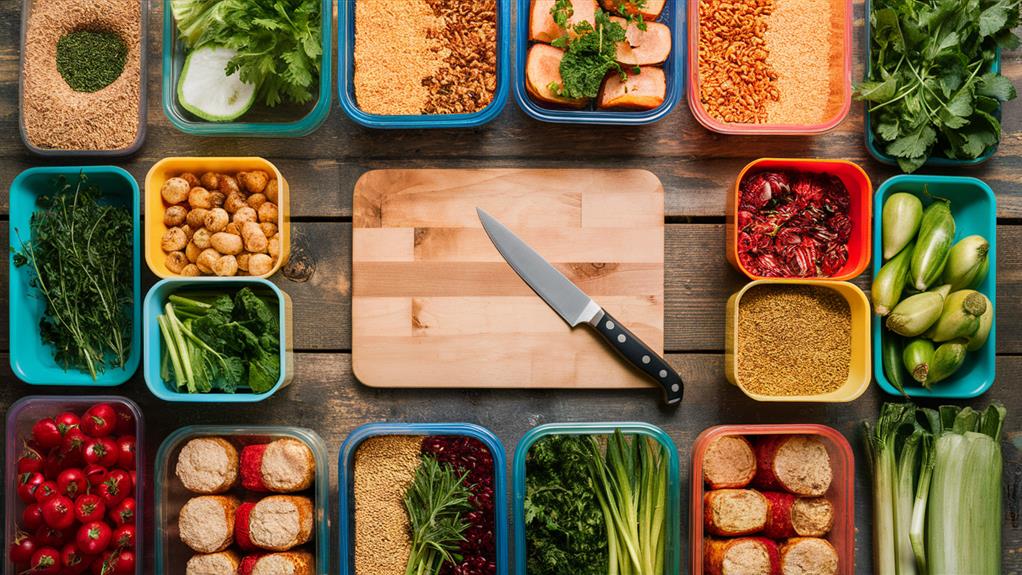
Meal prepping in batches can be a game changer for your weekly grocery shopping and cooking routine. By dedicating a few hours each week to prepare meals in advance, you not only save time but also guarantee you have healthy options ready to go.
This approach allows you to make the most of your grocery budget and reduces the temptation to splurge on convenience foods.
Consider these time-saving techniques when prepping in batches:
- Cook large portions of grains like quinoa or brown rice to use throughout the week.
- Prepare proteins such as grilled chicken or roasted vegetables that can be easily mixed into various meals.
- Create freezer meals that can be stored for later use, guaranteeing you always have something nutritious on hand.
When you batch cook, you can streamline your grocery shopping by buying ingredients in larger quantities, which often leads to savings.
Plus, having meals ready to go means less stress during busy weekdays. This practice not only fosters a sense of community as you can share meals with family or friends, but it also encourages accountability in your healthy eating habits.
Store Food Properly
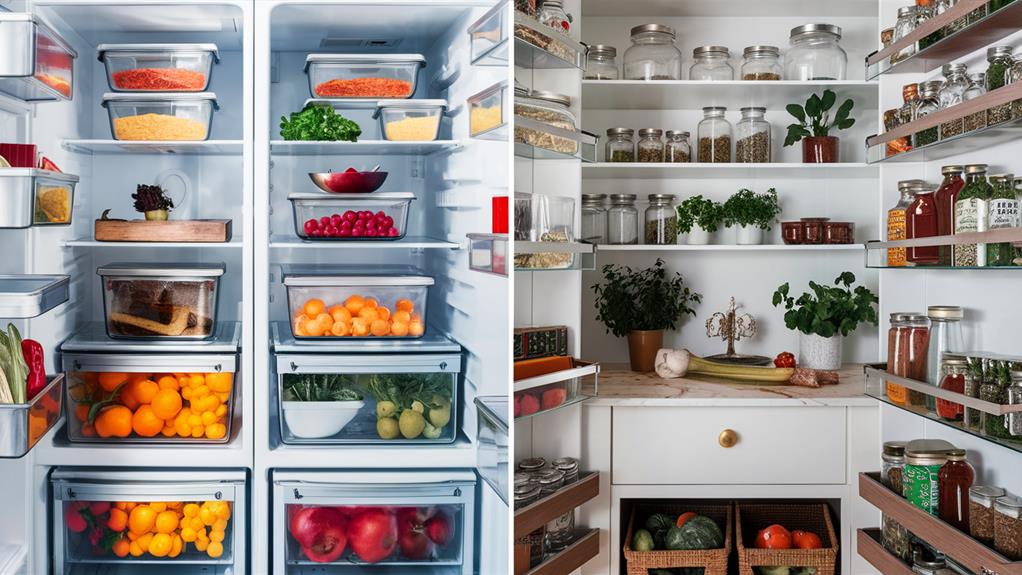
Proper food storage is vital for maintaining the freshness and nutritional value of your grocery purchases. When you invest time and money into selecting quality ingredients, it's important to protect that investment through effective food storage techniques. Understanding how to store food properly can make a significant difference in your meal prep and overall budget.
Start by organizing your pantry, fridge, and freezer. Use clear, labeled containers to keep track of what you have. This not only helps you find items quickly but also encourages you to use what you already own, reducing unnecessary purchases.
When it comes to freezing techniques, make sure you're using airtight containers or freezer bags. Remove as much air as possible to prevent freezer burn. You can also portion out meals before freezing, making it easier to grab a quick meal without defrosting more than you need.
For fruits and vegetables, consider their unique storage needs. Some items, like apples, do better in a cool, dry place, while leafy greens thrive in the fridge.
Use crisper drawers to maintain humidity levels and keep produce fresh longer.
Reduce Food Waste
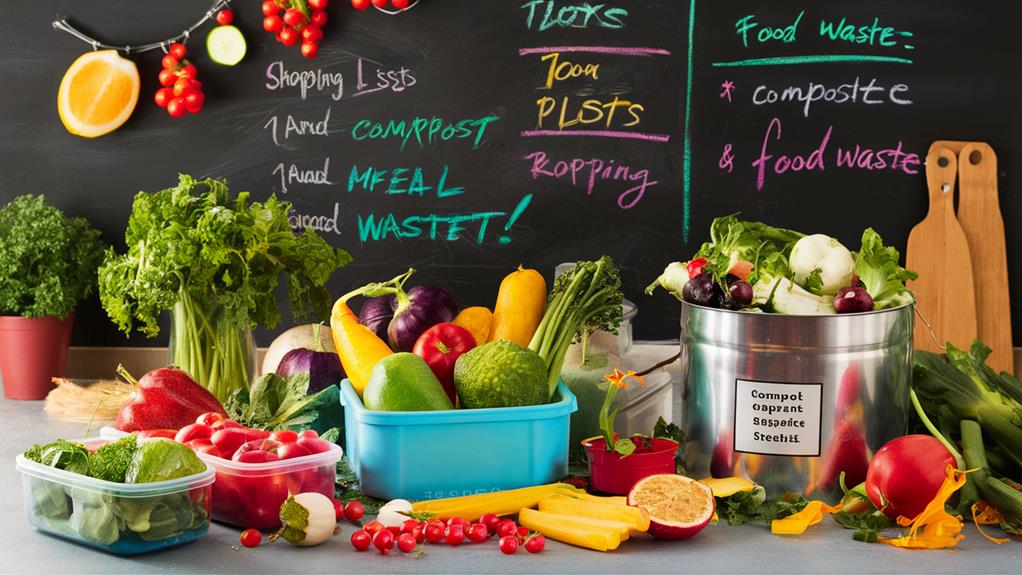
Reducing food waste is essential for both your wallet and the environment. When you think about it, every item you toss out represents money down the drain.
By adopting effective food preservation techniques and embracing creative leftovers, you can make a significant impact. Here are three practical strategies to help you on this journey:
- Plan your meals: Before shopping, take a moment to map out your week. Knowing what you need prevents impulse buys and guarantees you only purchase what you'll use.
- Store food wisely: Use airtight containers and proper refrigeration to extend the life of your groceries. It's surprising how much longer fruits and vegetables last when they're stored correctly.
- Get creative with leftovers: Instead of letting those uneaten meals sit in the fridge, transform them into new dishes. For example, last night's roasted veggies can be tossed into a morning omelet, or a few leftover grains can become a hearty salad.
Frequently Asked Questions
How Can I Save Money on Groceries Without Compromising Quality?
To save money on groceries without compromising quality, you might consider bulk buying. Purchasing staples in larger quantities often reduces the price per unit, and it's a smart strategy for non-perishables.
Additionally, focus on seasonal produce; it's typically fresher and more affordable. By being strategic about your purchases, you can enjoy high-quality meals while keeping your budget intact.
It's all about making informed choices that align with your values and needs.
What Are the Best Apps for Tracking Grocery Expenses?
When it comes to tracking grocery expenses, think of it as a treasure hunt for savings.
Apps like Mint and YNAB (You Need A Budget) excel in expense tracking, helping you create a solid grocery budgeting plan. They let you categorize spending, set limits, and analyze your habits.
With these tools, you'll gain a clearer picture of your expenses, making it easier to stick to your budget without feeling deprived. You'll feel empowered and connected.
How Do I Choose the Right Meal Prep Containers?
Choosing the right meal prep containers involves considering container materials and size options.
Look for durable materials like glass or BPA-free plastic, ensuring they're microwave and dishwasher safe.
Think about portion sizes too; smaller containers are great for snacks, while larger ones suit main meals.
Assess your storage space to avoid clutter.
Can I Still Eat Healthy on a Tight Budget?
Absolutely, you can eat healthy on a tight budget! Focus on budget-friendly recipes that utilize seasonal produce, which often costs less and tastes better.
Plan your meals around what's in season, and you'll not only save money but also enjoy fresher flavors. Incorporating whole grains, legumes, and frozen fruits and veggies can help stretch your budget while keeping your meals nutritious.
With a little creativity, you can nourish yourself without breaking the bank.
What Strategies Help Prevent Impulse Buying at the Store?
When you walk into a store, it's easy to get distracted by flashy displays. To prevent impulse buying, create a detailed shopping list before you go.
Stick to it, and consider bulk buying for items you frequently use—this not only saves money but reduces the temptation of buying unnecessary products.
Keeping your focus on your list helps you feel more in control and connected, turning grocery shopping into a purposeful experience rather than a chaotic one.
Conclusion
By planning your meals, making a list, and sticking to seasonal produce, you can save both time and money. Buying in bulk, using coupons, and avoiding convenience foods further stretch your budget. Meal prepping in batches and storing food properly reduces waste and maximizes value. Embracing these wallet-friendly tips not only enhances your grocery shopping experience but also promotes healthier eating habits. Adopt these strategies today, and watch your savings grow while enjoying delicious meals.