
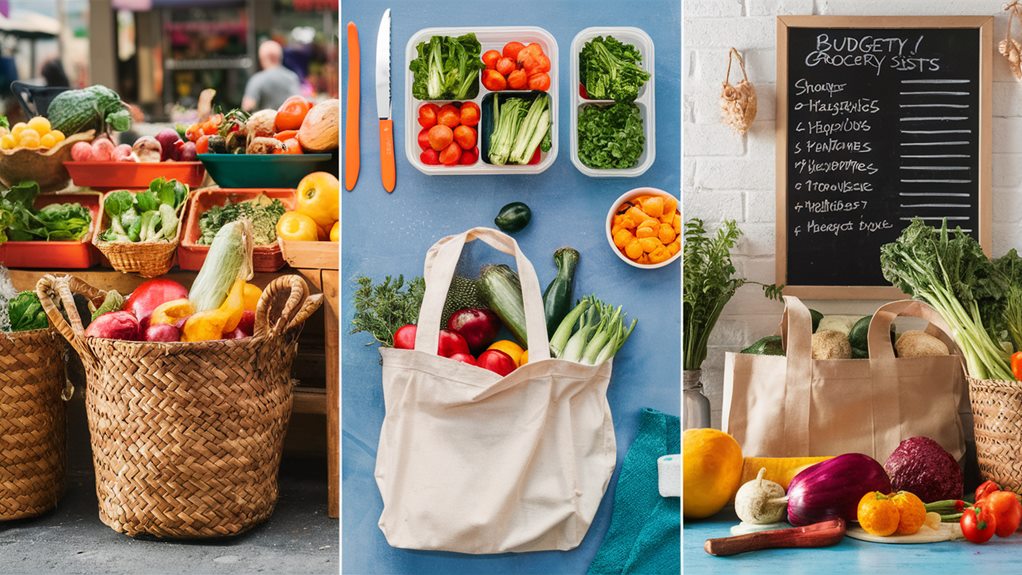
To grocery shop and meal prep on a budget, start by planning your meals ahead and making a detailed shopping list. This helps avoid impulse buys and guarantees you buy only what you need. Opt for seasonal produce for better freshness and savings, and consider buying in bulk for staple items. Use coupons and discounts, and don't hesitate to choose store brands for quality at lower prices. Prep your ingredients in advance and store them properly to extend shelf life. These strategies make shopping efficient and affordable, offering a solid foundation for future culinary endeavors.
Key Takeaways
- Plan meals in advance to reduce food waste and stick to your budget while enhancing meal variety.
- Create a shopping list to stay organized, avoid impulse buys, and limit unnecessary purchases.
- Buy in bulk for staple items to save money and minimize trips to the store.
- Utilize digital coupons and cashback apps for additional savings on your grocery bills.
- Stick to seasonal produce for fresher options and lower prices while supporting local farmers.
Plan Your Meals Ahead
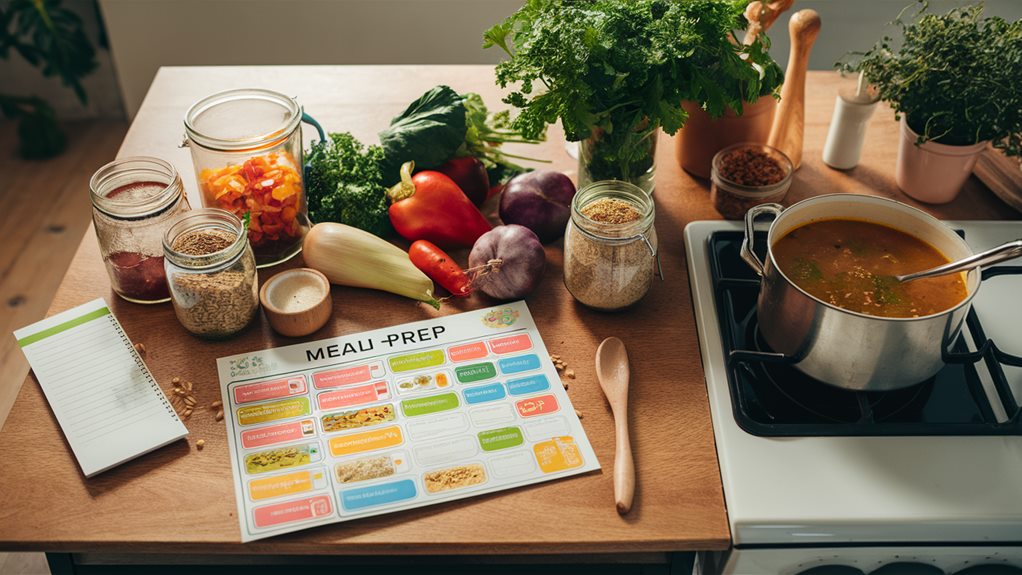
Planning your meals ahead can save you significant time and money—two resources we all value. When you take a little time each week to map out your meals, you not only reduce stress but also enhance your meal variety. This approach lets you explore new recipes and culinary experiences, making your dining enjoyable and less monotonous.
By planning, you can guarantee you're using ingredients efficiently, which helps you avoid waste and stick to your budget constraints. Additionally, just as selecting the right canister vacuum models can make cleaning easier, meal planning simplifies your grocery shopping process.
Consider the bigger picture: when you're clear about what you'll eat, it's easier to shop smartly. You can identify what you already have at home and what you truly need to buy. This prevents impulse purchases that often derail your budget.
Plus, by anticipating your meals, you can leverage sales or seasonal produce, maximizing your grocery budget.
Involving your family or friends in the planning process can also boost your sense of belonging. Share ideas and gather input to create a meal plan everyone looks forward to.
Ultimately, meal planning not only supports your financial goals but fosters a communal spirit around food, making every meal a shared experience.
Make a Shopping List
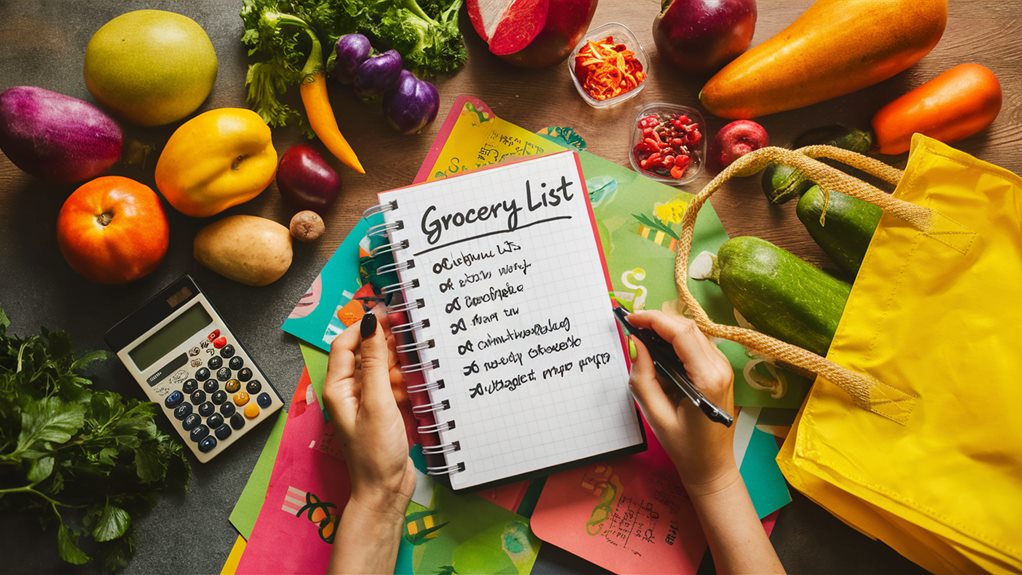
Creating a shopping list before you head to the grocery store is essential for staying organized and on budget. This simple yet powerful tool is one of the best shopping strategies for effective grocery budgeting. By writing down what you need, you reduce the temptation to buy unnecessary items that can quickly add up.
Additionally, consider incorporating refrigerator organization tips to help you manage your food storage better.
Start by reviewing your meal plan and identifying the ingredients you'll need. Group similar items together to streamline your shopping experience. For instance, list all produce together, followed by dairy, grains, and proteins. This not only saves time but also keeps you focused on the task at hand.
Don't forget to check your pantry and fridge before making your list. You might already have some essentials at home, which can help prevent duplicate purchases.
Stick to your list while you shop, and resist the urge to wander down aisles that don't contain your needed items.
Stick to Seasonal Produce
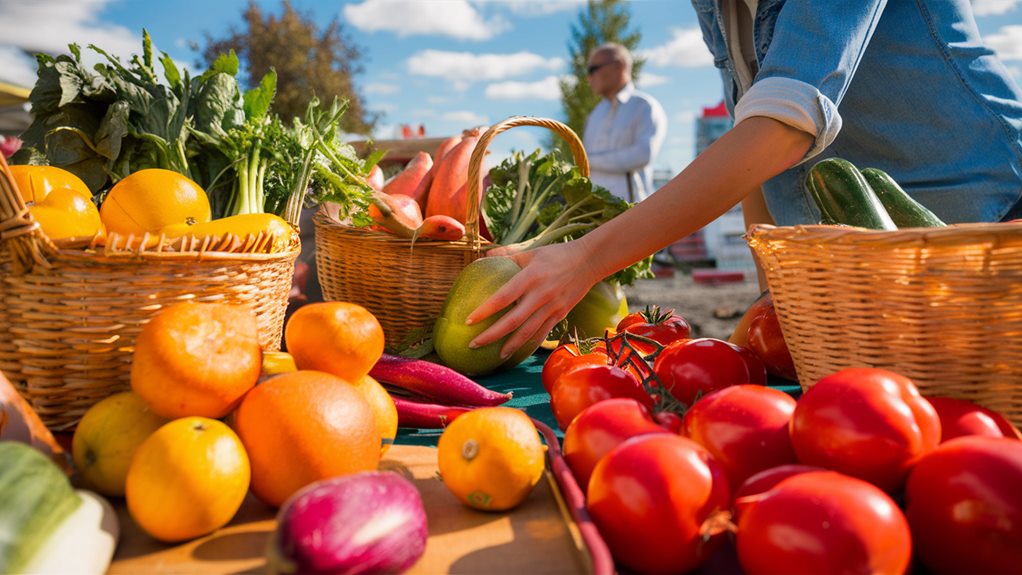
When you stick to seasonal produce, you not only enjoy fresher flavors but also save money. Seasonal fruits and vegetables are often cheaper because they're abundant and don't require costly transportation. By choosing what's in season, you're supporting local farmers, which fosters a sense of community and encourages sustainable practices.
Additionally, incorporating seasonal ingredients can enhance your meals with a variety of nutrients and flavors, similar to how using natural fertilizers can enrich your garden's yield and health.
To make the most of your seasonal produce, look for recipes that highlight these ingredients. Seasonal recipes often emphasize the natural flavors and nutritional benefits of fresh produce, making your meals not just healthier but also more satisfying. For instance, in the summer, you might find yourself enjoying ripe tomatoes and zucchini, while fall brings hearty squash and apples.
Shopping at local farmers' markets is a great way to discover what's in season. You'll connect with growers, learn about their practices, and often find unique varieties that aren't available in supermarkets.
Plus, the experience of browsing fresh produce can enhance your sense of belonging to a local food community.
Buy in Bulk

Buying in bulk can considerably cut your grocery expenses, especially for staple items like grains, pasta, and canned goods. When you opt for bulk purchasing, you're not just saving money; you're also embracing a smarter way of shopping. Here are a few highlights:
- Lower unit prices
- Reduced packaging waste
- Fewer shopping trips
By investing in bulk storage solutions, you create a more organized kitchen while minimizing food waste. For instance, containers or jars for rice, beans, and flour can keep your pantry tidy and your ingredients fresh.
Plus, when you buy larger quantities, you often pay less per unit, which adds up to significant savings over time.
You'll also find that bulk purchasing allows you to stock up on items that fit your lifestyle, whether you're meal prepping for the week or planning for a busy month ahead.
Just remember to check expiration dates and verify you'll use the items before they spoil.
By incorporating bulk buying into your grocery routine, you're not only reducing costs but also fostering a sense of community and shared resources among friends and family.
Embrace the savings and simplify your shopping experience!
Use Coupons and Discounts
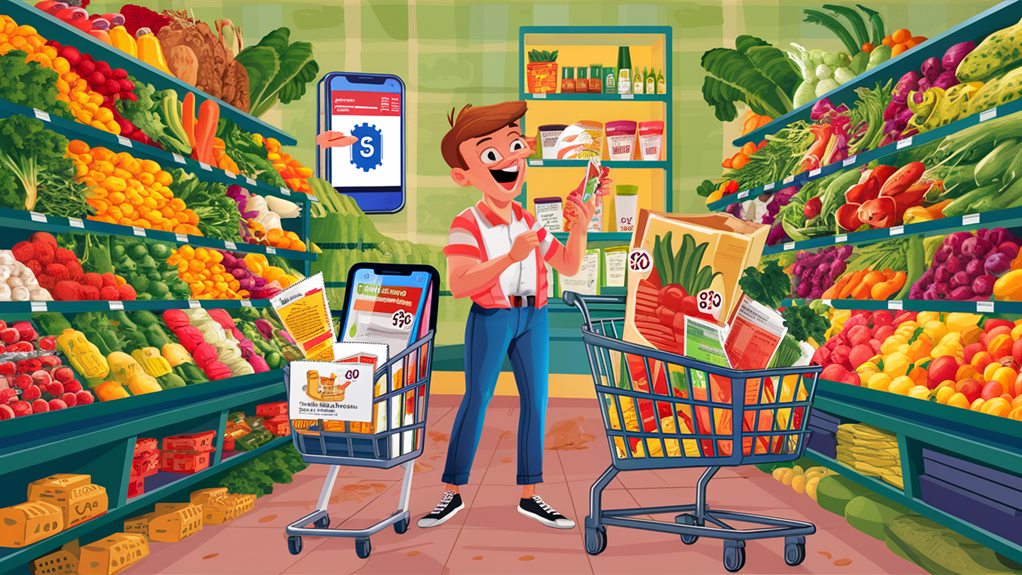
Using coupons and discounts can greatly enhance your grocery shopping strategy, allowing you to maximize your savings without sacrificing quality.
Start by exploring digital coupons available through store apps or websites. These often provide immediate savings at checkout and can be easily integrated into your shopping routine. Consider joining grocery memberships and loyalty programs, which frequently offer exclusive discounts and promotions tailored to your shopping habits.
Coupon stacking is another smart tactic; combine store promotions with printable coupons for even greater savings. For example, if a product is on sale, you can often use a coupon with it to lower the price further.
Don't overlook cashback apps either—these can provide you with additional money back on your purchases, making your grocery haul more wallet-friendly.
Mobile couponing is increasingly popular, allowing you to access and redeem coupons directly from your smartphone. This convenience means you'll never miss out on savings while shopping.
Compare Unit Prices
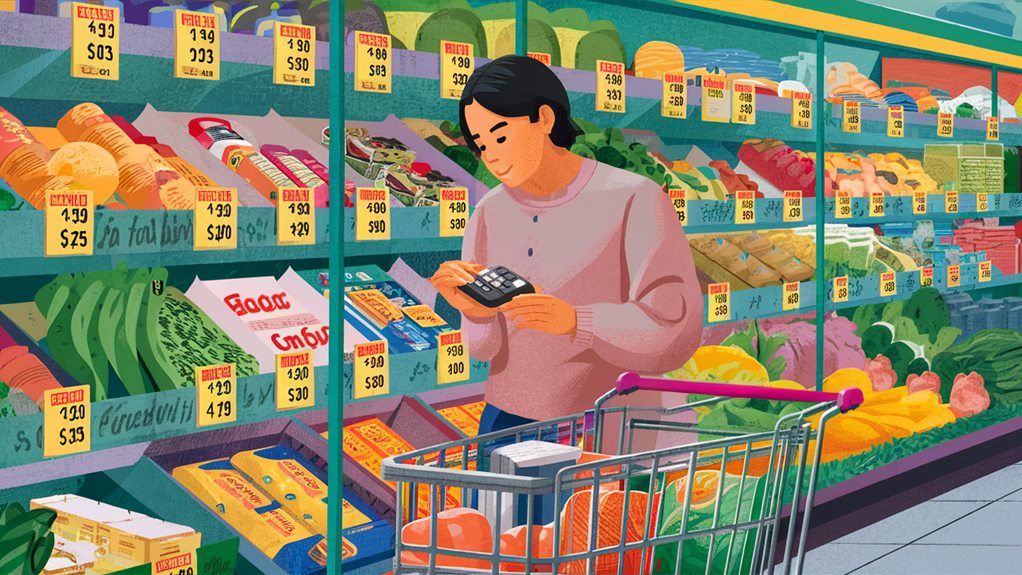
One of the smartest strategies for grocery shopping is comparing unit prices, which can reveal the true value of products beyond just their shelf prices. When you take the time to analyze these prices, you're empowered to make informed choices that can lead to significant savings.
Here are a few benefits of unit price comparison:
- You'll identify the best deals, even if the package sizes vary.
- It helps you understand the value of bulk purchasing options.
- You can effectively utilize price matching policies at different stores.
As you navigate the aisles, keep an eye out for unit prices displayed on the shelf tags. This number represents the cost per ounce, pound, or item, allowing you to assess which product offers more bang for your buck.
Don't forget to evaluate bulk purchasing; sometimes, buying larger quantities can save you more in the long run. Additionally, if you find a better price at another store, leverage price matching to guarantee you pay the lowest rate available.
Choose Store Brands

Store brands often provide a budget-friendly alternative to name-brand products without sacrificing quality. Many shoppers overlook these options, but doing so can lead to significant savings. When you choose store brands, you're not just saving money; you're also accessing products that often meet or exceed the quality of their name-brand counterparts.
Quality comparisons show that many store brands use similar ingredients and manufacturing processes as name brands. In fact, various studies have demonstrated that consumers frequently can't tell the difference in taste or performance. This is especially true for staples like pasta, rice, and canned goods. By opting for store brands, you can enjoy the same great flavors while keeping your grocery bills in check.
Another of the store brand benefits is the variety they offer. Many retailers now provide a wide range of options, often including organic or specialty items.
Embracing these choices not only supports your wallet but also fosters a sense of belonging within your community, as you and fellow shoppers make smarter, informed decisions together.
In short, choosing store brands is a practical way to enhance your grocery shopping experience without compromising on quality.
Avoid Impulse Buys

Even when you opt for store brands, it's easy to go off track and overspend due to impulse buys. Understanding grocery psychology can help you combat these shopping triggers and stick to your budget. Here are a few common triggers to watch out for:
- Eye-catching displays at the end of aisles
- Limited-time offers that create a sense of urgency
- Sampling stations that entice you to try before you buy
To avoid impulse purchases, start by making a detailed shopping list and commit to sticking to it. This list acts as your roadmap, helping you navigate the store's tempting landscape.
Additionally, implementing a strict budget can create a mental barrier against those impulse buys. When you know exactly how much you can spend, it becomes easier to resist the allure of those unplanned items.
Consider shopping during off-peak hours to reduce distractions and stress, making it easier to focus on your list.
Prep Ingredients in Advance
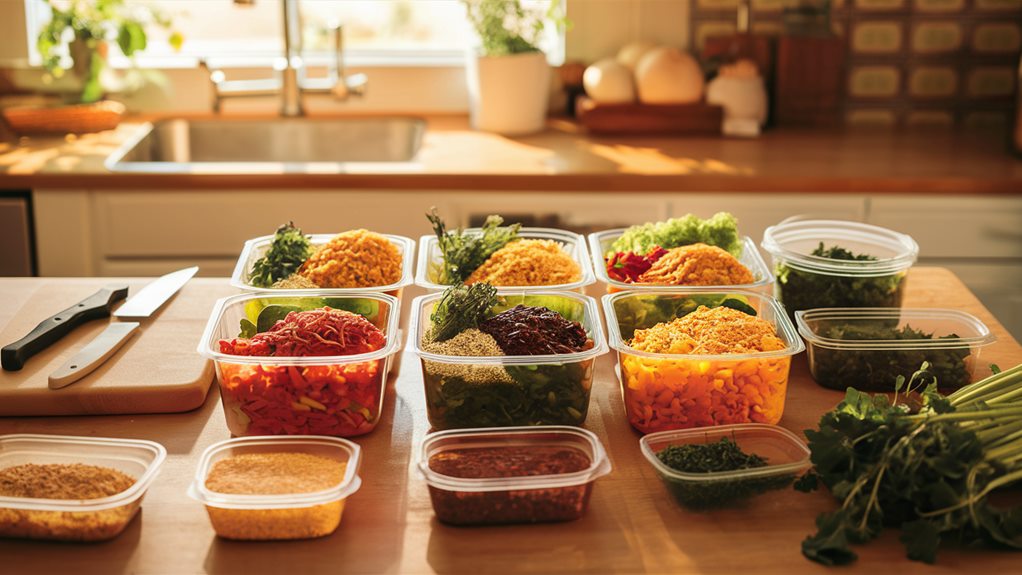
Preparing ingredients in advance can greatly streamline your grocery shopping experience and enhance meal preparation efficiency. By organizing your kitchen and prepping ingredients, you'll not only save time but also money.
Start with versatile staples like grains and legumes, which can be cooked in batches. Batch cooking allows you to make large quantities that can be portioned out and stored for later use, promoting portion control.
Pre-chopped vegetables are a game-changer; they're convenient and can be incorporated into various meals, enhancing flavor without extra effort. When you prep ingredients, consider how they'll be stored. Proper ingredient storage in airtight containers can prolong freshness and reduce waste.
Don't forget about freezer meals. Preparing meals ahead of time and freezing them can save you on busy days, ensuring you have healthy options at your fingertips.
Organize your recipes so you can easily access them when needed, allowing for quick meal assembly. With these strategies, you'll not only enjoy flavorful dishes but also foster a sense of community as you share your culinary creations with friends and family.
Store Food Properly
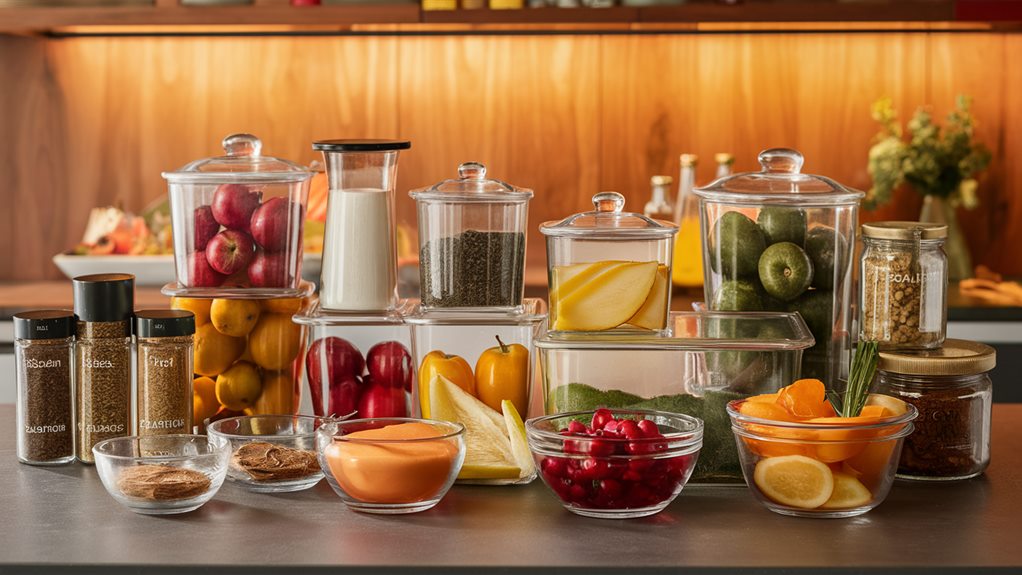
Proper food storage is just as important as prepping ingredients in advance, as it directly impacts the freshness and longevity of your groceries. When you take the time to store food properly, you not only save money but also minimize waste.
Here are some essential tips to enhance your food storage practices:
- Use airtight containers to keep ingredients fresh.
- Label your frozen items with dates to track their freshness.
- Organize your pantry and fridge so you can easily see what you have.
One effective strategy is to utilize freezing techniques. For instance, portion out meals before freezing, which makes defrosting easier and more efficient.
When freezing fruits and vegetables, blanch them first to preserve their color and nutrients.
Understanding how to store various foods can transform your shopping habits. Certain items, like bread and cheese, have specific storage needs that can prolong their shelf life.
By investing in proper food storage, you create a sense of belonging in your kitchen, where every ingredient has purpose and value.
Frequently Asked Questions
How Can I Save Money on Organic Produce?
To save money on organic produce, focus on your buying strategies.
Look for seasonal selections, as they're often cheaper and fresher. Consider joining a local co-op or a community-supported agriculture (CSA) program to get organic fruits and veggies directly from farmers.
You can also buy in bulk or freeze excess produce when prices drop.
What Are the Best Apps for Grocery Price Comparison?
When you're looking to save on groceries, using grocery apps for price tracking can be a game changer.
Apps like Flipp and Basket allow you to compare prices across different stores, helping you find the best deals. You can also set alerts for sales on items you frequently buy.
How Do I Properly Store Leftovers to Avoid Waste?
To properly store leftovers and avoid waste, start by using airtight containers to enhance food preservation.
Cool your leftovers quickly before sealing them to prevent bacteria growth. Label each container with the date to track freshness.
Store them in the fridge for up to four days, or freeze for longer storage. Reheat only what you'll eat, and avoid refreezing thawed food.
Following these steps helps you enjoy your meals without feeling guilty about waste.
Can Meal Prepping Help With Dietary Restrictions?
Meal prepping can be a game-changer for managing dietary restrictions. By planning your meals, you guarantee a broader dietary variety that meets your specific needs.
You can avoid cross-contamination and harmful ingredients while enjoying diverse, nutritious options. The meal planning benefits extend beyond just avoiding allergens; it helps you stick to your dietary goals and enhances your overall well-being.
Plus, it fosters a sense of control and belonging in your food journey.
What Are Some Low-Cost Protein Alternatives?
When you're looking for low-cost protein alternatives, consider incorporating plant-based options like lentils, beans, and chickpeas into your meals.
These foods aren't only budget-friendly but also versatile and nutritious.
If you prefer meats, opt for budget-friendly options like chicken thighs or ground turkey, which are often cheaper than more expensive cuts.
Conclusion
By following these wallet-friendly grocery shopping and meal prep tips, you can save money while enjoying delicious, healthy meals. Just like a well-tuned engine runs smoothly, a little planning and awareness can keep your budget on track. Embrace the power of preparation and smart choices, and you'll find that eating well doesn't have to break the bank. With each step, you're not just saving money; you're investing in a healthier lifestyle and future.